
Contents
- 🌌 Introduction to Nihilism
- 📚 Historical Roots of Nihilism
- 💔 The Void of Meaning
- 👊 Existentialism and Nihilism
- 🤖 The Impact of Science on Nihilism
- 🌎 Nihilism in Modern Society
- 📊 Types of Nihilism
- 👀 Criticisms of Nihilism
- 💡 Nihilism in Art and Literature
- 🌈 Conclusion: The Paradox of Nihilism
- 📝 References and Further Reading
- Frequently Asked Questions
- Related Topics
Overview
Nihilism, a term coined by German philosopher Friedrich Nietzsche in the 19th century, refers to the belief that life has no inherent meaning or value. This philosophical stance argues that traditional morality, religion, and cultural norms are baseless and that we must create our own meaning in a seemingly indifferent universe. With a vibe rating of 6, nihilism is a complex and controversial topic, sparking debates among philosophers, scholars, and the general public. The concept has been linked to various influential figures, including Arthur Schopenhauer, Søren Kierkegaard, and Jean-Paul Sartre, who have all contributed to the ongoing discussion on the nature of existence and human purpose. As a cultural and intellectual phenomenon, nihilism has been associated with a range of artistic and literary movements, from existentialism to postmodernism. With its roots in 19th-century European philosophy, nihilism continues to shape contemporary thought and culture, leaving us to ponder the question: can we find meaning in a meaningless world?
🌌 Introduction to Nihilism
Nihilism is a philosophical concept that has been debated and explored by scholars, philosophers, and artists for centuries. At its core, nihilism is the idea that life has no inherent meaning or value. This concept is closely related to Existentialism, which posits that individuals must create their own meaning in life. The German philosopher Friedrich Nietzsche is often credited with popularizing the concept of nihilism, arguing that the death of God had led to a crisis of meaning in modern society. As a result, individuals must take responsibility for creating their own values and meaning. For more information on Nietzsche's philosophy, see Nietzschean Philosophy.
📚 Historical Roots of Nihilism
The historical roots of nihilism can be traced back to ancient Greece, where philosophers such as Aristotle and Epicurus grappled with the concept of meaning and purpose. However, it was not until the 19th century that nihilism emerged as a distinct philosophical movement. The Russian novelist Fyodor Dostoevsky explored nihilistic themes in his works, such as Crime and Punishment. The concept of nihilism was further developed by philosophers such as Martin Heidegger and Jean-Paul Sartre, who argued that human existence is characterized by its own inherent meaninglessness. For a deeper understanding of existentialism, see Existentialism.
💔 The Void of Meaning
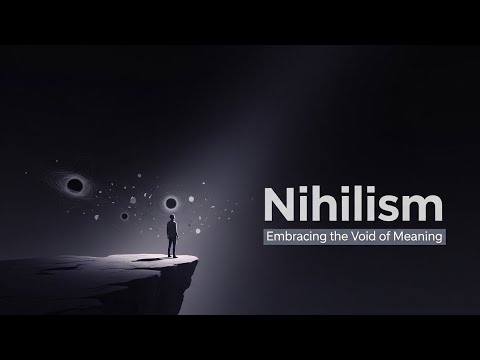
The void of meaning is a central concept in nihilism, referring to the idea that life has no inherent purpose or significance. This can be a challenging and unsettling idea, as it suggests that our existence is without direction or goal. However, some philosophers argue that this void can also be liberating, allowing individuals to create their own meaning and purpose. The concept of the void is closely related to the idea of Absurdism, which posits that the human desire for meaning and purpose is at odds with the apparent meaninglessness of the world. For more information on absurdism, see Albert Camus.
👊 Existentialism and Nihilism
Existentialism and nihilism are closely related philosophical concepts, both of which emphasize the individual's freedom and responsibility to create their own meaning in life. However, while existentialism tends to focus on the individual's ability to create their own meaning, nihilism often emphasizes the inherent meaninglessness of existence. The French philosopher Jean-Paul Sartre argued that human beings are condemned to be free, and must take responsibility for creating their own values and meaning. For a deeper understanding of Sartre's philosophy, see Sartrean Philosophy.
🤖 The Impact of Science on Nihilism
The impact of science on nihilism has been significant, as scientific discoveries have often challenged traditional beliefs and values. The theory of Evolution, for example, has led some to question the idea of a creator or higher power, and has instead emphasized the role of chance and natural selection in shaping the natural world. The concept of Cosmology has also led to a greater understanding of the universe and our place within it, but has also raised questions about the significance and purpose of human existence. For more information on the relationship between science and philosophy, see Philosophy of Science.
🌎 Nihilism in Modern Society
Nihilism in modern society is a complex and multifaceted phenomenon, reflecting a range of attitudes and values. Some individuals may embrace nihilism as a liberating force, allowing them to create their own meaning and purpose in life. Others may reject nihilism, arguing that it leads to a lack of direction and purpose. The concept of nihilism has also been influential in art and literature, with many artists and writers exploring nihilistic themes in their work. For example, the novel The Stranger by Albert Camus is a classic example of nihilistic literature. For more information on Camus' philosophy, see Camusian Philosophy.
📊 Types of Nihilism
There are several types of nihilism, each with its own distinct characteristics and implications. Moral Nihilism, for example, argues that there is no objective moral framework, and that moral values are simply a matter of personal preference. Epistemological Nihilism, on the other hand, argues that there is no objective truth, and that all knowledge is relative and subjective. Existential Nihilism emphasizes the individual's freedom and responsibility to create their own meaning in life. For a deeper understanding of these concepts, see Nihilism.
👀 Criticisms of Nihilism
Criticisms of nihilism are numerous and varied, with some arguing that it leads to a lack of direction and purpose in life. Others argue that nihilism is overly pessimistic, and that it fails to account for the many positive aspects of human existence. The concept of nihilism has also been criticized for its potential to lead to moral relativism, where moral values are seen as arbitrary and subjective. However, proponents of nihilism argue that it is a necessary and liberating force, allowing individuals to create their own meaning and purpose in life. For more information on the criticisms of nihilism, see Criticisms of Nihilism.
💡 Nihilism in Art and Literature
Nihilism in art and literature is a significant and enduring theme, reflecting the complex and often contradictory nature of human existence. Many artists and writers have explored nihilistic themes in their work, often using humor, irony, and satire to critique the notion of meaning and purpose. The novel Steppenwolf by Hermann Hesse is a classic example of nihilistic literature, exploring the tensions between individual freedom and social responsibility. For more information on the relationship between art and nihilism, see Nihilism in Art.
🌈 Conclusion: The Paradox of Nihilism
In conclusion, nihilism is a complex and multifaceted philosophical concept that has been debated and explored by scholars, philosophers, and artists for centuries. While it can be a challenging and unsettling idea, nihilism also offers a liberating and empowering perspective on human existence. By embracing the void of meaning, individuals can create their own meaning and purpose in life, and take responsibility for their own values and beliefs. For a deeper understanding of the implications of nihilism, see Implications of Nihilism.
📝 References and Further Reading
For further reading on the topic of nihilism, see Nihilism, Existentialism, and Absurdism. Additionally, the works of Friedrich Nietzsche, Martin Heidegger, and Jean-Paul Sartre provide a deeper understanding of the concept of nihilism and its implications for human existence.
Key Facts
- Year
- 1862
- Origin
- Germany
- Category
- Philosophy
- Type
- Philosophical Concept
- Format
- what-is
Frequently Asked Questions
What is nihilism?
Nihilism is a philosophical concept that argues that life has no inherent meaning or value. It is closely related to existentialism, which posits that individuals must create their own meaning in life. For more information, see Nihilism.
Who is the founder of nihilism?
The German philosopher Friedrich Nietzsche is often credited with popularizing the concept of nihilism. However, the concept of nihilism has its roots in ancient Greece and has been developed by many philosophers throughout history. For more information, see Nietzschean Philosophy.
What are the different types of nihilism?
There are several types of nihilism, including Moral Nihilism, Epistemological Nihilism, and Existential Nihilism. Each type has its own distinct characteristics and implications. For a deeper understanding, see Nihilism.
Is nihilism a pessimistic philosophy?
Nihilism is often seen as a pessimistic philosophy, as it argues that life has no inherent meaning or value. However, some proponents of nihilism argue that it is a liberating and empowering perspective, allowing individuals to create their own meaning and purpose in life. For more information, see Nihilism.
How does nihilism relate to art and literature?
Nihilism has been a significant theme in art and literature, reflecting the complex and often contradictory nature of human existence. Many artists and writers have explored nihilistic themes in their work, often using humor, irony, and satire to critique the notion of meaning and purpose. For more information, see Nihilism in Art.
What are the implications of nihilism?
The implications of nihilism are complex and multifaceted, and can be both liberating and unsettling. By embracing the void of meaning, individuals can create their own meaning and purpose in life, and take responsibility for their own values and beliefs. For a deeper understanding, see Implications of Nihilism.
How does nihilism relate to existentialism?
Nihilism and existentialism are closely related philosophical concepts, both of which emphasize the individual's freedom and responsibility to create their own meaning in life. However, while existentialism tends to focus on the individual's ability to create their own meaning, nihilism often emphasizes the inherent meaninglessness of existence. For more information, see Existentialism.