
Contents
- 🤖 Introduction to Artificial Intelligence
- 💻 History of AI: From Inception to Maturity
- 📊 AI Applications: Transforming Industries and Lives
- 🚀 AI and Machine Learning: The Power Duo
- 🤝 Human-AI Collaboration: Augmenting Capabilities
- 🚫 The Dark Side of AI: Job Displacement and Bias
- 🔒 AI Safety and Security: Mitigating Risks
- 🌎 AI for Social Good: Improving Lives and Communities
- 📈 AI Market Trends: Growth, Investment, and Adoption
- 🤔 AI Ethics: Navigating the Gray Areas
- 🚀 AI Future: Emerging Trends and Opportunities
- Frequently Asked Questions
- Related Topics
Overview
Artificial intelligence, with its roots in the 1950s courtesy of pioneers like Alan Turing and Marvin Minsky, has evolved from a futuristic fantasy to a palpable reality, influencing everything from healthcare and finance to education and entertainment. The AI landscape is marked by both breathtaking advancements, such as the victories of AlphaGo over human champions, and profound challenges, including job displacement and ethical dilemmas. As of 2023, the global AI market is projected to reach $190 billion, with companies like Google, Microsoft, and Facebook leading the charge. However, the path forward is fraught with controversy, including debates over AI's potential to exacerbate social inequalities and its role in autonomous weaponry. The influence of AI can be seen in the work of entities like the Allen Institute for Artificial Intelligence, founded by Paul Allen, and the Future of Life Institute, backed by Elon Musk. With a vibe score of 8, reflecting its high cultural energy and the intense public and private sector investment it attracts, AI stands at the crossroads of human history, promising unparalleled benefits but also posing unprecedented risks.
🤖 Introduction to Artificial Intelligence
Artificial intelligence (AI) has become a ubiquitous term in the technology landscape, with its applications spanning across various industries. Artificial Intelligence is the capability of computational systems to perform tasks typically associated with human intelligence, such as learning, reasoning, problem-solving, perception, and decision-making. As a field of research in engineering, mathematics and computer science, AI develops and studies methods and software that enable machines to perceive their environment and use learning and intelligence to take actions that maximize their chances of achieving defined goals. The concept of AI has been around for decades, but recent advancements in deep learning and neural networks have accelerated its growth. AI research is a rapidly evolving field, with new breakthroughs and innovations emerging every day.
💻 History of AI: From Inception to Maturity
The history of AI dates back to the mid-20th century, when computer scientists like Alan Turing and Marvin Minsky began exploring the possibilities of creating intelligent machines. The field has undergone significant transformations since then, with the development of expert systems in the 1980s and the rise of machine learning in the 1990s. Today, AI is a mature field with a wide range of applications, from virtual assistants like Amazon Alexa and Google Assistant to self-driving cars and medical diagnosis. AI history is a rich and fascinating topic, with many interesting stories and anecdotes. The development of AI has been shaped by the contributions of many pioneers, including John McCarthy and Frank Rosenblatt.
📊 AI Applications: Transforming Industries and Lives
AI applications are transforming industries and lives in profound ways. From customer service chatbots to predictive maintenance in manufacturing, AI is being used to improve efficiency, productivity, and decision-making. Healthcare is another area where AI is making a significant impact, with applications in medical imaging, disease diagnosis, and personalized medicine. Finance and banking are also being revolutionized by AI, with the use of machine learning algorithms for risk management and portfolio optimization. AI applications are diverse and widespread, with new use cases emerging every day. The use of AI in education is also becoming increasingly popular, with adaptive learning systems and intelligent tutoring systems being developed to improve student outcomes.
🚀 AI and Machine Learning: The Power Duo
AI and machine learning are closely related fields, with the latter being a key subset of the former. Machine learning involves the use of algorithms and statistical models to enable machines to learn from data, without being explicitly programmed. Deep learning is a type of machine learning that uses neural networks to analyze data. The combination of AI and machine learning has given rise to many exciting applications, including image recognition, natural language processing, and speech recognition. AI and machine learning are being used to develop virtual assistants, self-driving cars, and medical diagnosis systems. The use of AI and machine learning in cybersecurity is also becoming increasingly important, with the development of threat detection and incident response systems.
🤝 Human-AI Collaboration: Augmenting Capabilities
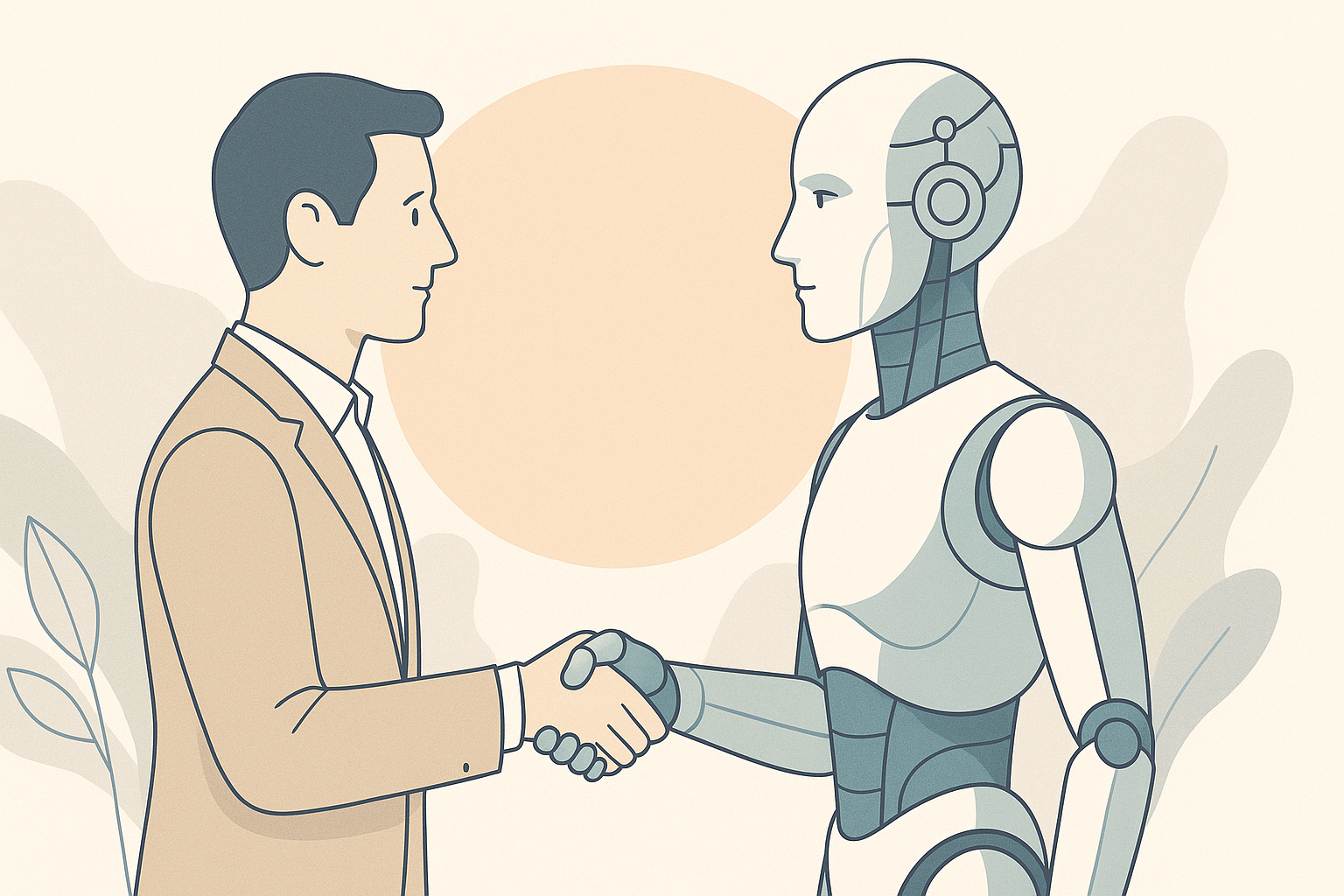
Human-AI collaboration is becoming increasingly important, as machines and humans work together to achieve common goals. Human-AI collaboration involves the use of AI systems to augment human capabilities, rather than replace them. This can involve the use of AI-assisted tools to improve decision-making, or the development of human-AI teams to solve complex problems. Human-AI collaboration is being used in many areas, including healthcare, finance, and education. The use of AI in human resources is also becoming increasingly popular, with the development of AI-powered recruitment and AI-powered training systems. AI and human collaboration is a rapidly evolving field, with many new applications and use cases emerging every day.
🚫 The Dark Side of AI: Job Displacement and Bias
The dark side of AI is a topic of increasing concern, as the technology is being used to displace jobs and perpetuate bias. AI job displacement is a significant issue, as machines and algorithms replace human workers in many industries. AI bias is another problem, as AI systems can perpetuate existing biases and discriminate against certain groups. AI ethics is a rapidly evolving field, with many experts and organizations working to develop guidelines and regulations for the responsible development and use of AI. AI safety is also a critical issue, as AI systems can pose significant risks to human safety and well-being. The use of AI in surveillance and facial recognition is also raising concerns about privacy and civil liberties.
🔒 AI Safety and Security: Mitigating Risks
AI safety and security are critical issues, as AI systems can pose significant risks to human safety and well-being. AI safety involves the development of AI systems that are safe, reliable, and secure. AI security involves the protection of AI systems from cyber threats and attacks. AI risk management is a critical aspect of AI development, as it involves the identification and mitigation of potential risks and threats. AI safety and security are essential for the responsible development and use of AI, and many experts and organizations are working to develop guidelines and regulations for AI safety and security. The use of AI in critical infrastructure is also raising concerns about national security and public safety.
📈 AI Market Trends: Growth, Investment, and Adoption
AI market trends are a significant area of focus, as the AI market is growing rapidly and is expected to continue to do so in the coming years. AI market trends involve the analysis of the AI market, including the size, growth, and trends of the market. AI adoption is a significant trend, as more and more organizations are adopting AI to improve their operations and competitiveness. AI investment is also a significant trend, as investors are pouring billions of dollars into AI startups and research initiatives. AI jobs are also a significant trend, as the demand for AI talent is increasing rapidly. The use of AI in business is also becoming increasingly popular, with the development of AI-powered business models and AI-powered marketing strategies.
🚀 AI Future: Emerging Trends and Opportunities
The future of AI is a topic of significant interest and speculation, as experts and organizations work to develop new and innovative AI applications. AI future involves the consideration of the potential impacts and implications of AI, including issues related to job displacement, bias, and privacy. AI emerging trends involve the analysis of the latest developments and advancements in AI, including the use of edge AI, explainable AI, and transfer learning. AI opportunities involve the consideration of the potential benefits and applications of AI, including issues related to healthcare, education, and environment. The use of AI in space exploration is also becoming increasingly popular, with the development of AI-powered spacecraft and AI-powered robotics.
Key Facts
- Year
- 1950
- Origin
- Dartmouth Summer Research Project on Artificial Intelligence
- Category
- Technology
- Type
- Concept
Frequently Asked Questions
What is artificial intelligence?
Artificial intelligence (AI) is the capability of computational systems to perform tasks typically associated with human intelligence, such as learning, reasoning, problem-solving, perception, and decision-making. Artificial Intelligence is a field of research in engineering, mathematics and computer science that develops and studies methods and software that enable machines to perceive their environment and use learning and intelligence to take actions that maximize their chances of achieving defined goals. The concept of AI has been around for decades, but recent advancements in deep learning and neural networks have accelerated its growth. AI research is a rapidly evolving field, with new breakthroughs and innovations emerging every day.
What are the applications of AI?
AI applications are diverse and widespread, with new use cases emerging every day. AI applications are being used to transform industries and lives, from customer service chatbots to predictive maintenance in manufacturing. Healthcare is another area where AI is making a significant impact, with applications in medical imaging, disease diagnosis, and personalized medicine. Finance and banking are also being revolutionized by AI, with the use of machine learning algorithms for risk management and portfolio optimization.
What is the difference between AI and machine learning?
AI and machine learning are closely related fields, with the latter being a key subset of the former. Machine learning involves the use of algorithms and statistical models to enable machines to learn from data, without being explicitly programmed. Deep learning is a type of machine learning that uses neural networks to analyze data. The combination of AI and machine learning has given rise to many exciting applications, including image recognition, natural language processing, and speech recognition.
What are the risks and challenges associated with AI?
The risks and challenges associated with AI are significant, and include issues related to job displacement, bias, and privacy. AI ethics is a rapidly evolving field, as experts and organizations work to develop guidelines and regulations for the responsible development and use of AI. AI safety is also a critical issue, as AI systems can pose significant risks to human safety and well-being. The use of AI in critical infrastructure is also raising concerns about national security and public safety.
What is the future of AI?
The future of AI is a topic of significant interest and speculation, as experts and organizations work to develop new and innovative AI applications. AI future involves the consideration of the potential impacts and implications of AI, including issues related to job displacement, bias, and privacy. AI emerging trends involve the analysis of the latest developments and advancements in AI, including the use of edge AI, explainable AI, and transfer learning.
How is AI being used in healthcare?
AI is being used in healthcare to improve healthcare access, healthcare quality, and healthcare outcomes. AI for healthcare involves the use of AI to analyze medical data, develop personalized treatment plans, and improve patient outcomes. Medical imaging is another area where AI is making a significant impact, with the use of deep learning algorithms to analyze medical images and diagnose diseases. Clinical decision support systems are also being developed to help healthcare professionals make informed decisions about patient care.
What is the role of AI in education?
AI is being used in education to improve education access, education quality, and education outcomes. AI for education involves the use of AI to develop personalized learning plans, improve student outcomes, and enhance teacher productivity. Adaptive learning systems are being developed to adjust to the needs and abilities of individual students, while intelligent tutoring systems are being used to provide one-on-one support to students.